Sketchbook
Welcome to my online sketchbook. Here you will get a window into my approach, what inspires me, and progress on my latest projects. This year, I have decided to focus on portrait and figure drawing to help round out my explorations in architecture.
Portraits in Pencil - I
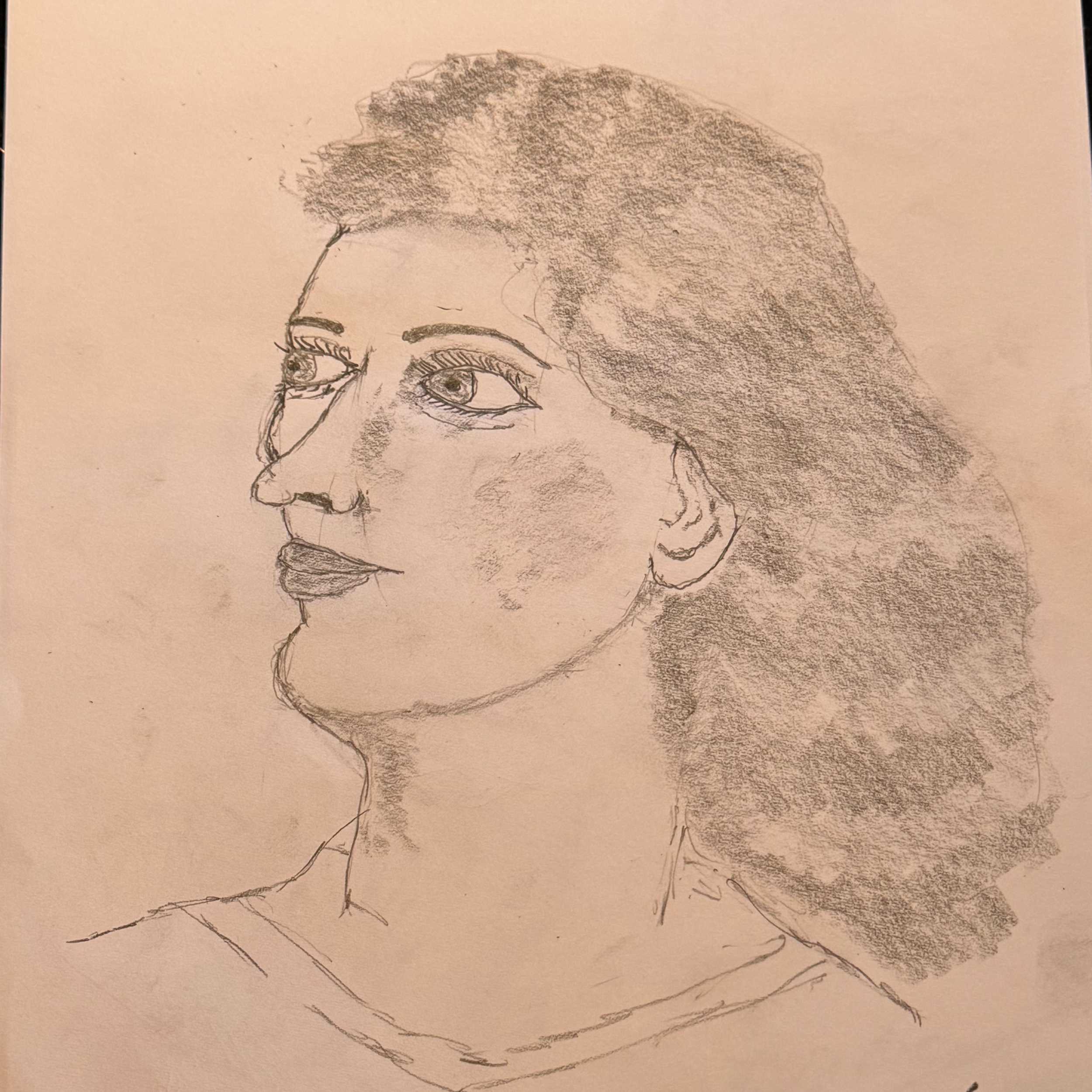
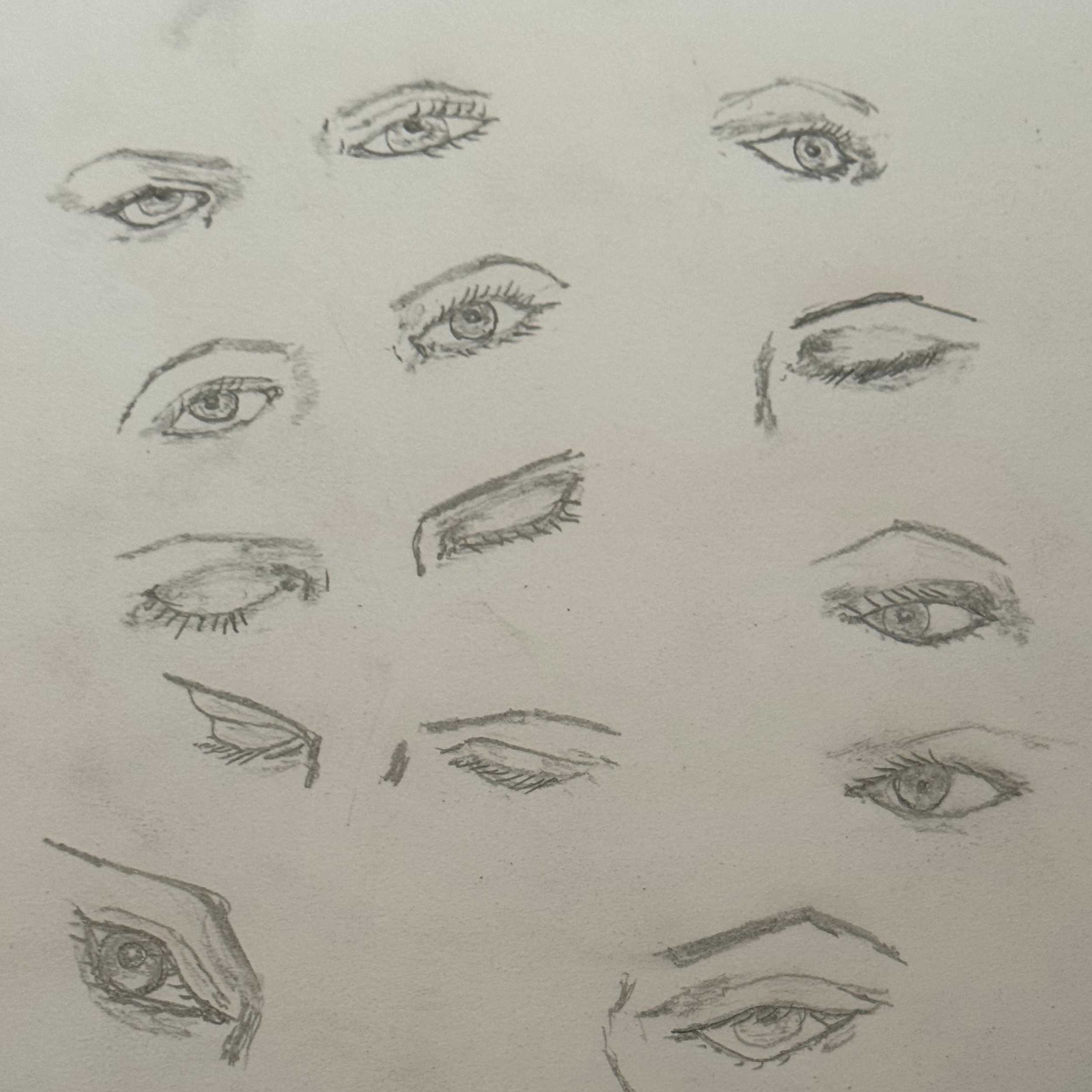
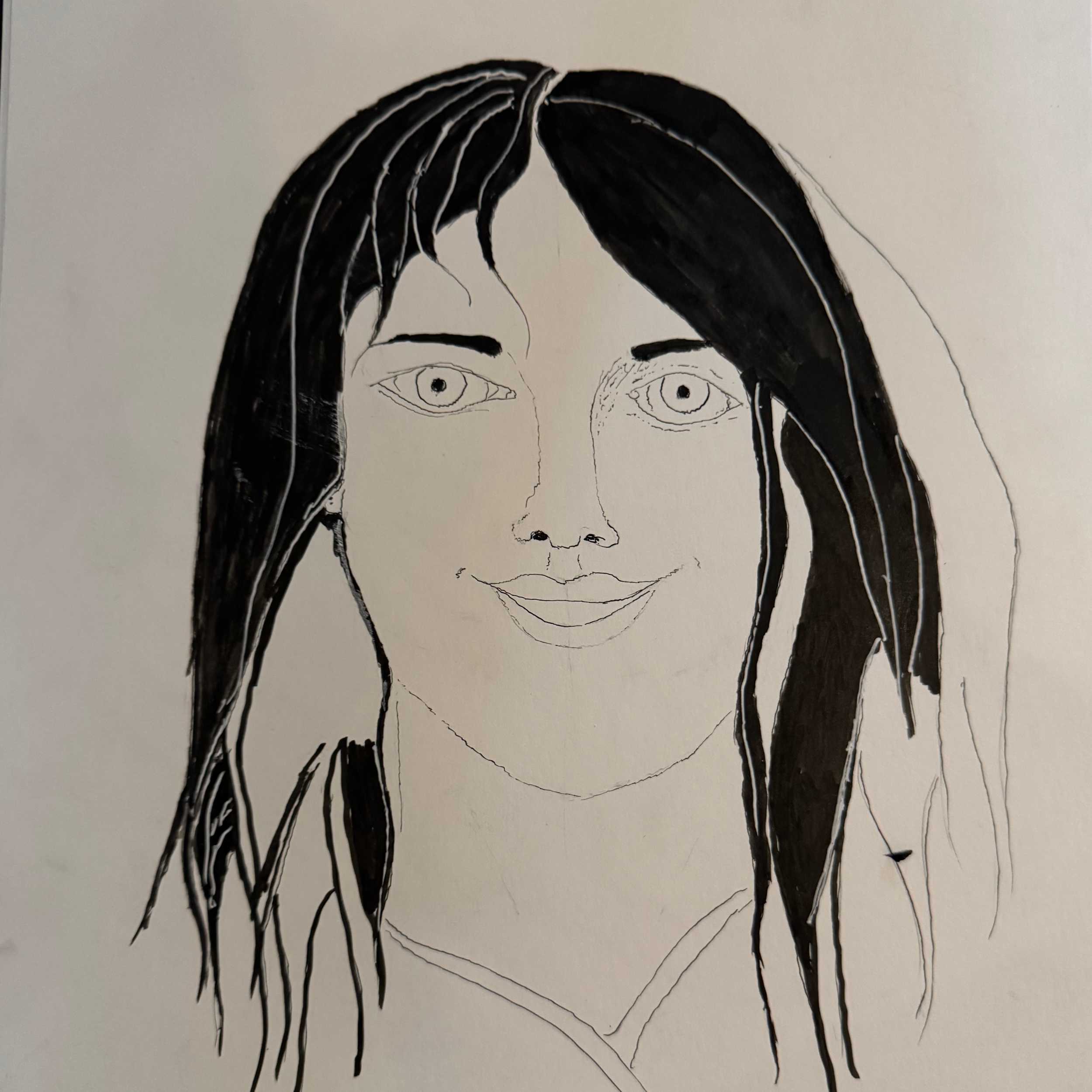
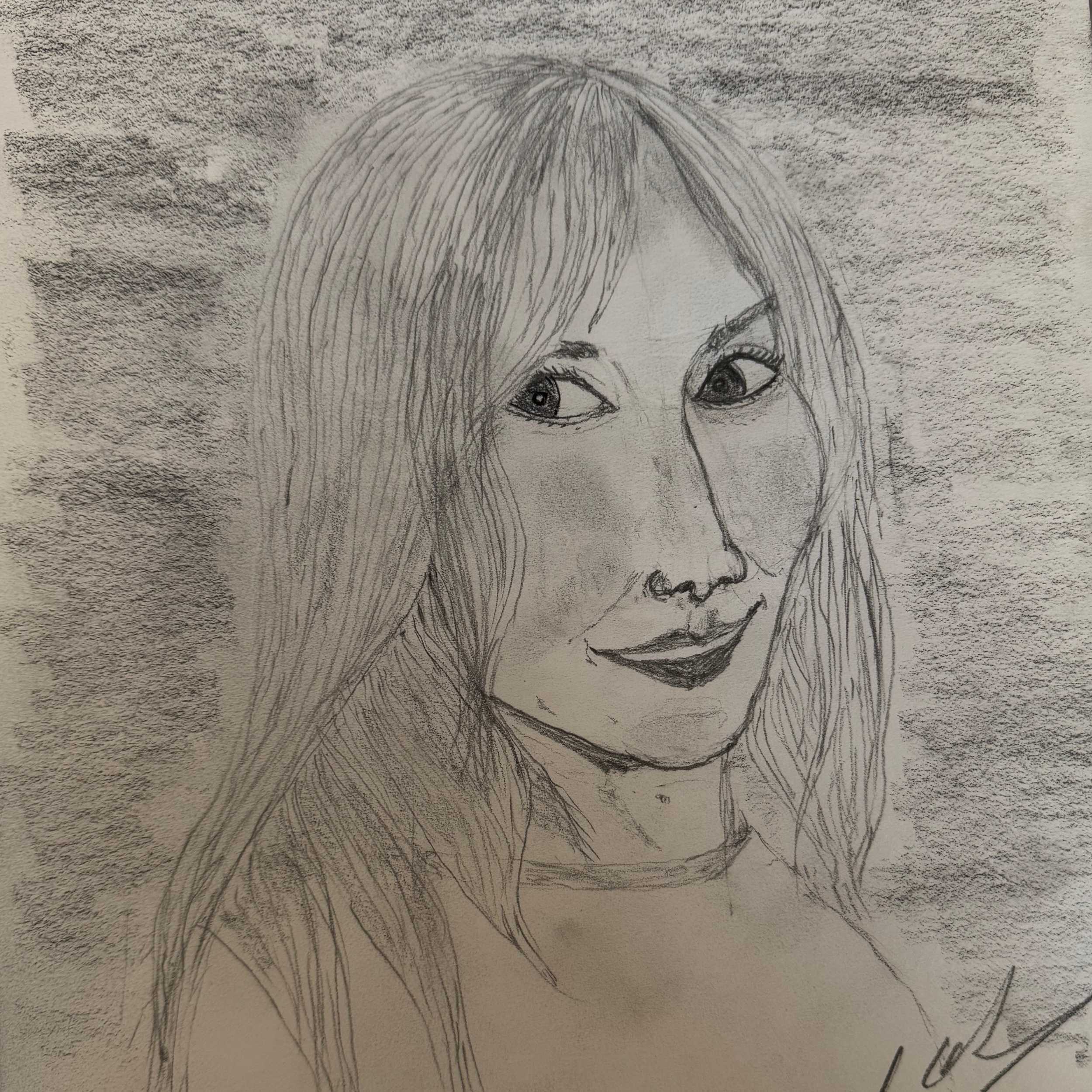
This morning, I continued working with portraits in pencil, mainly to practice proportions and positioning of the facial elements. I also paid more attention to shading, especially around the eyes and nose, to help define these features without relying upon the heaviness of lines.
Portraits, Proportions, & Pencil - I
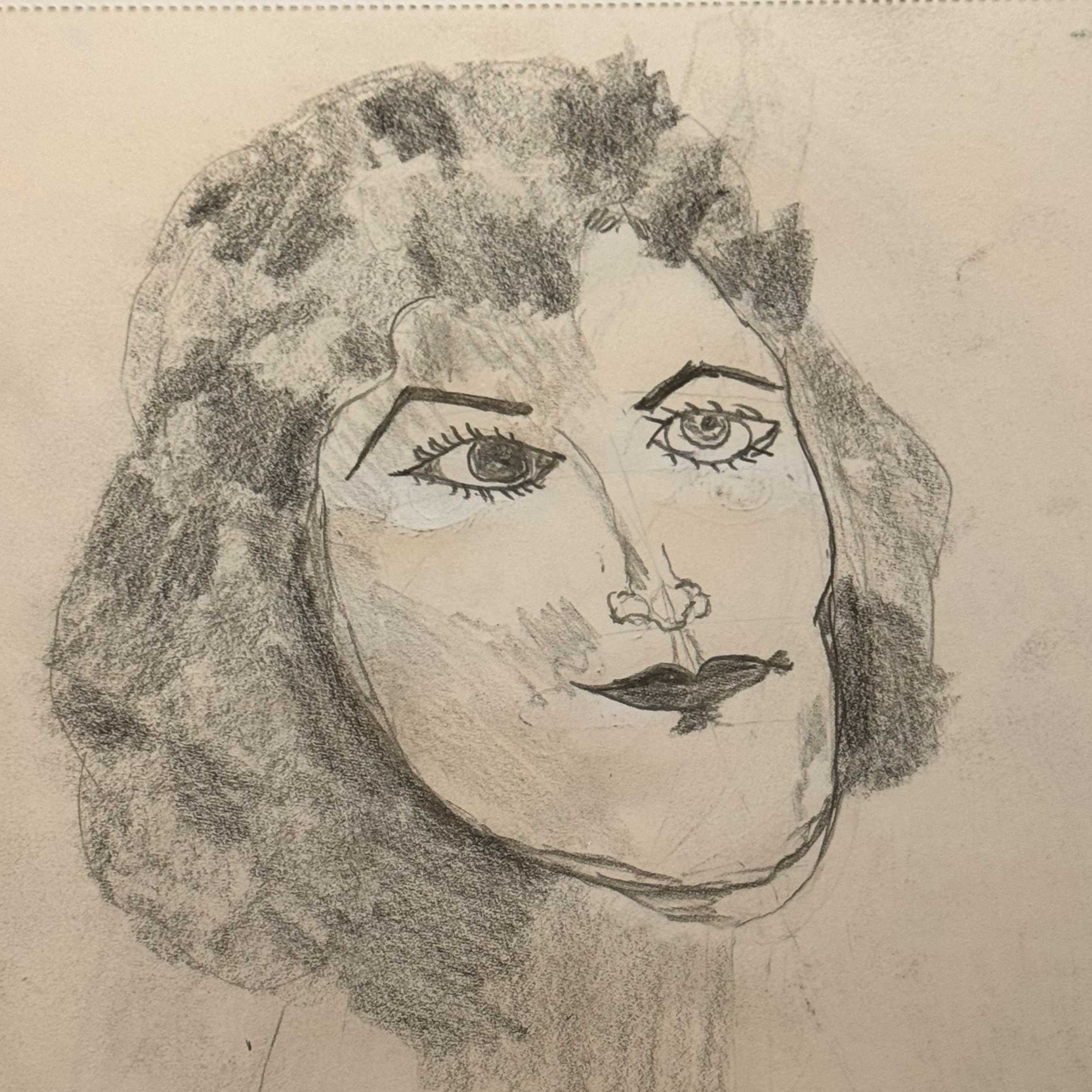
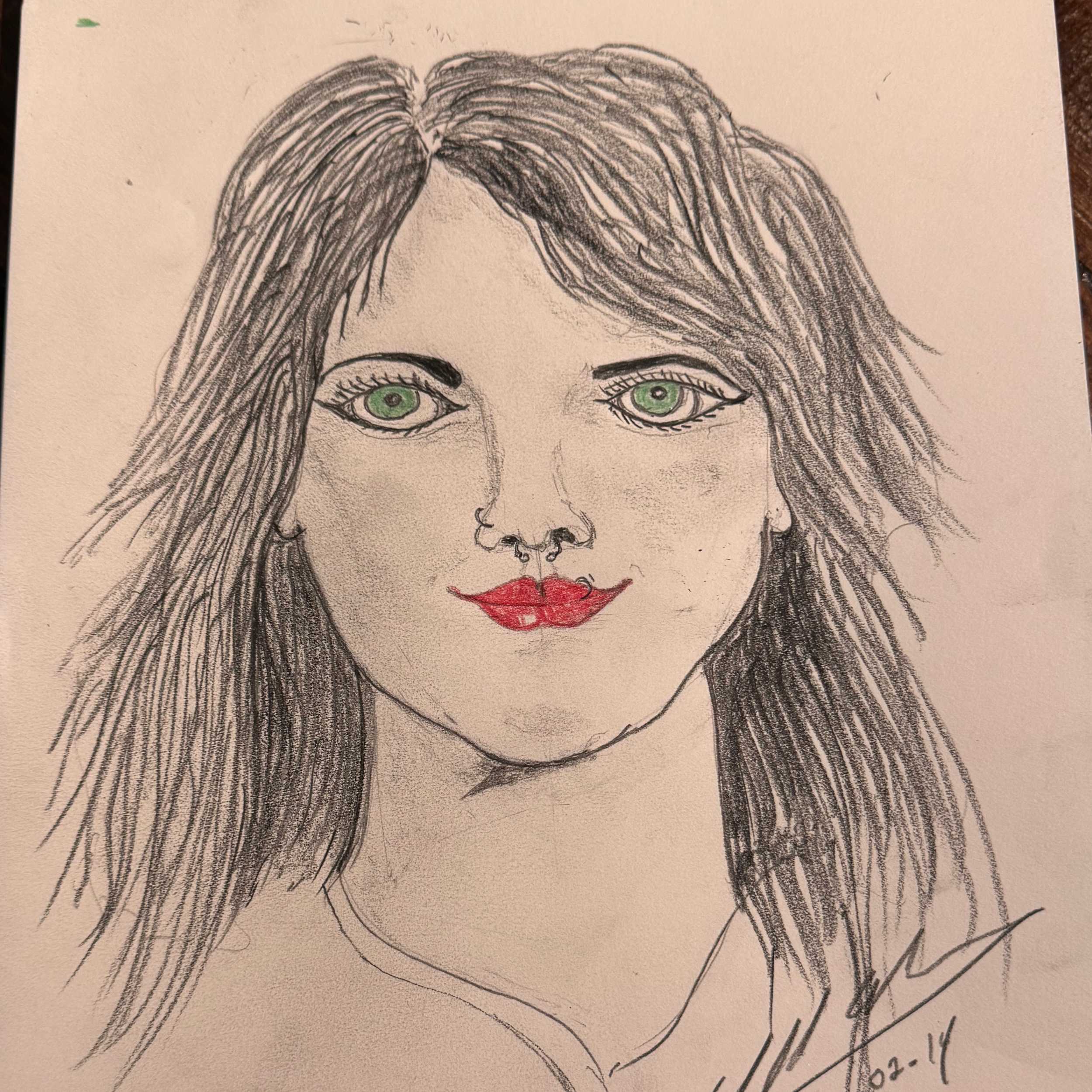
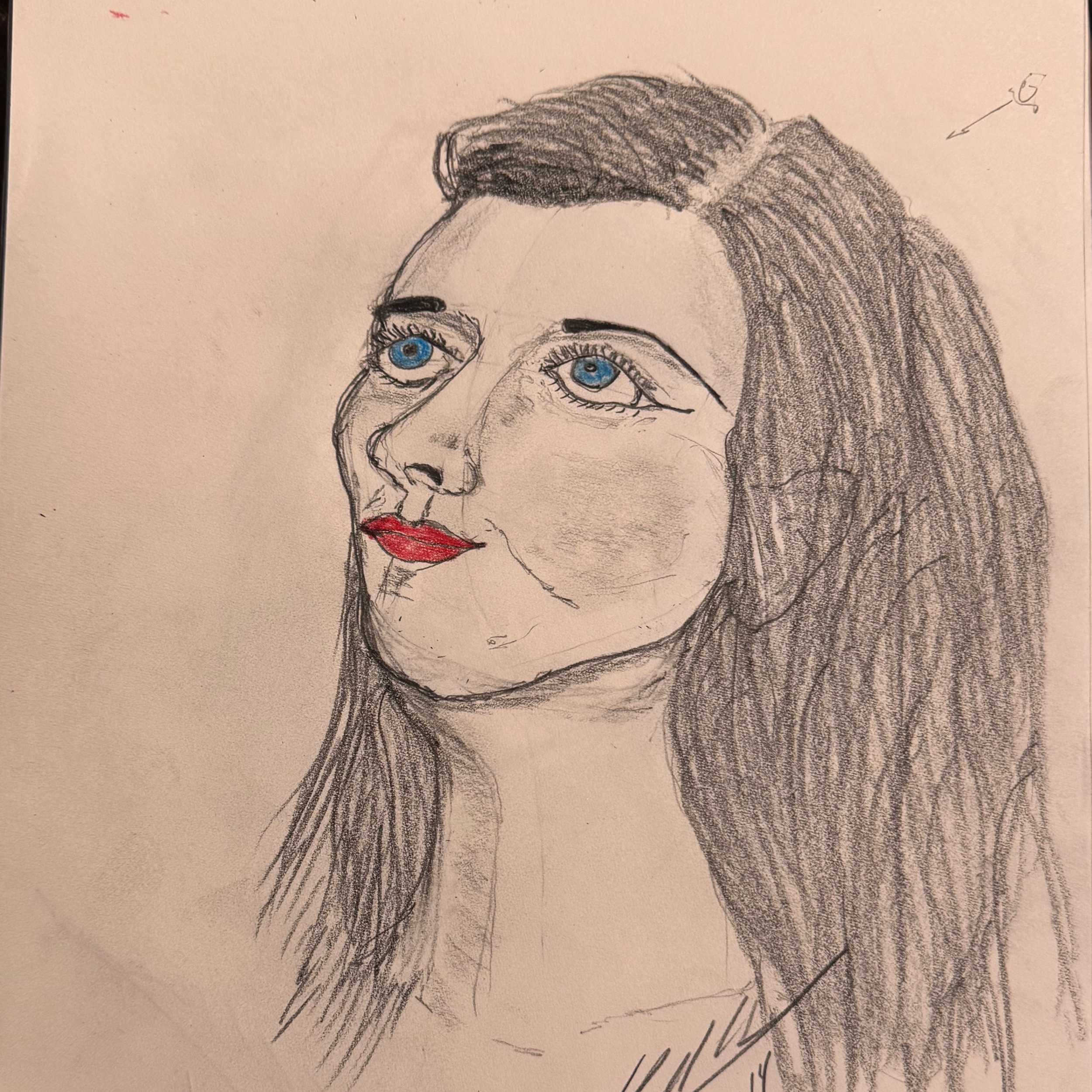
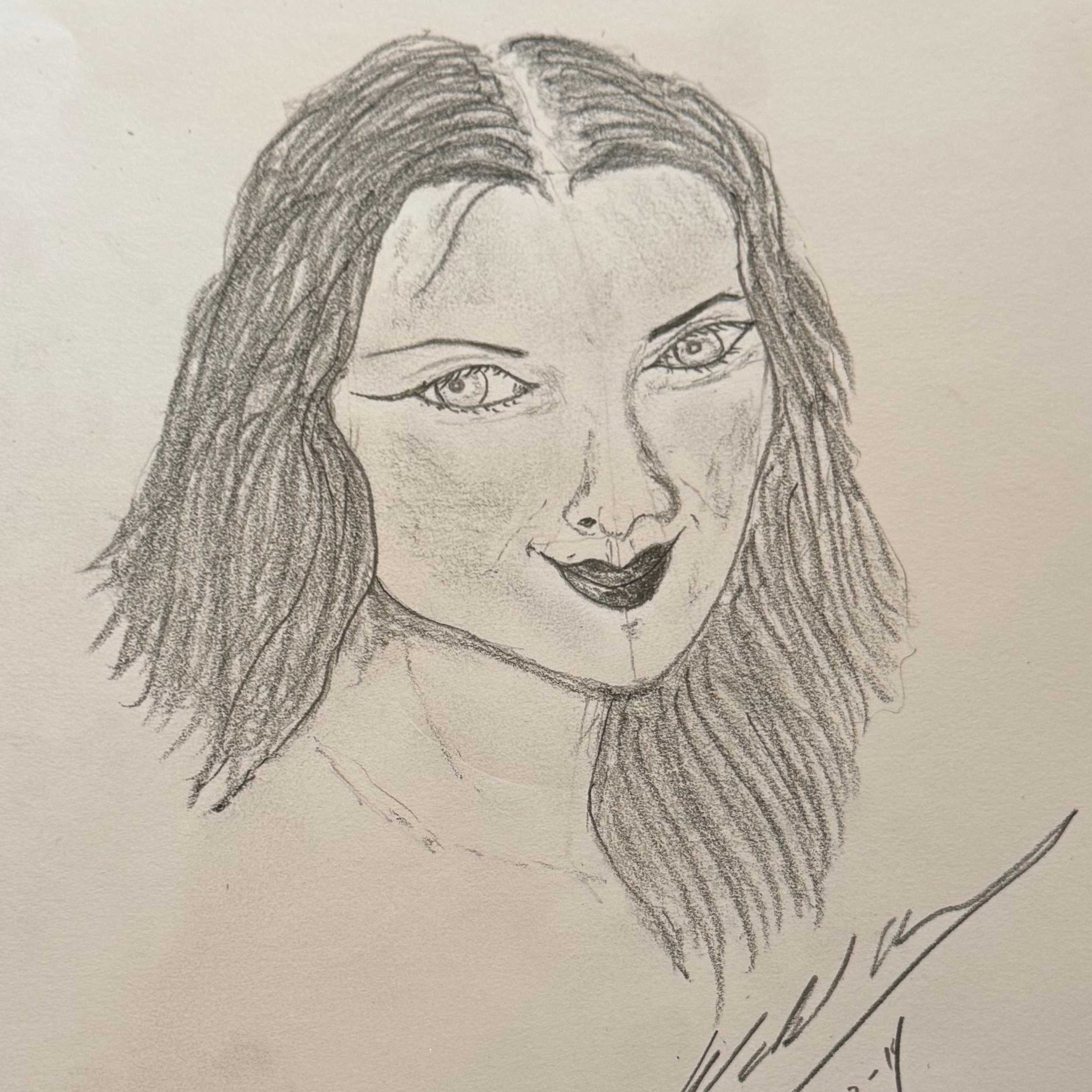
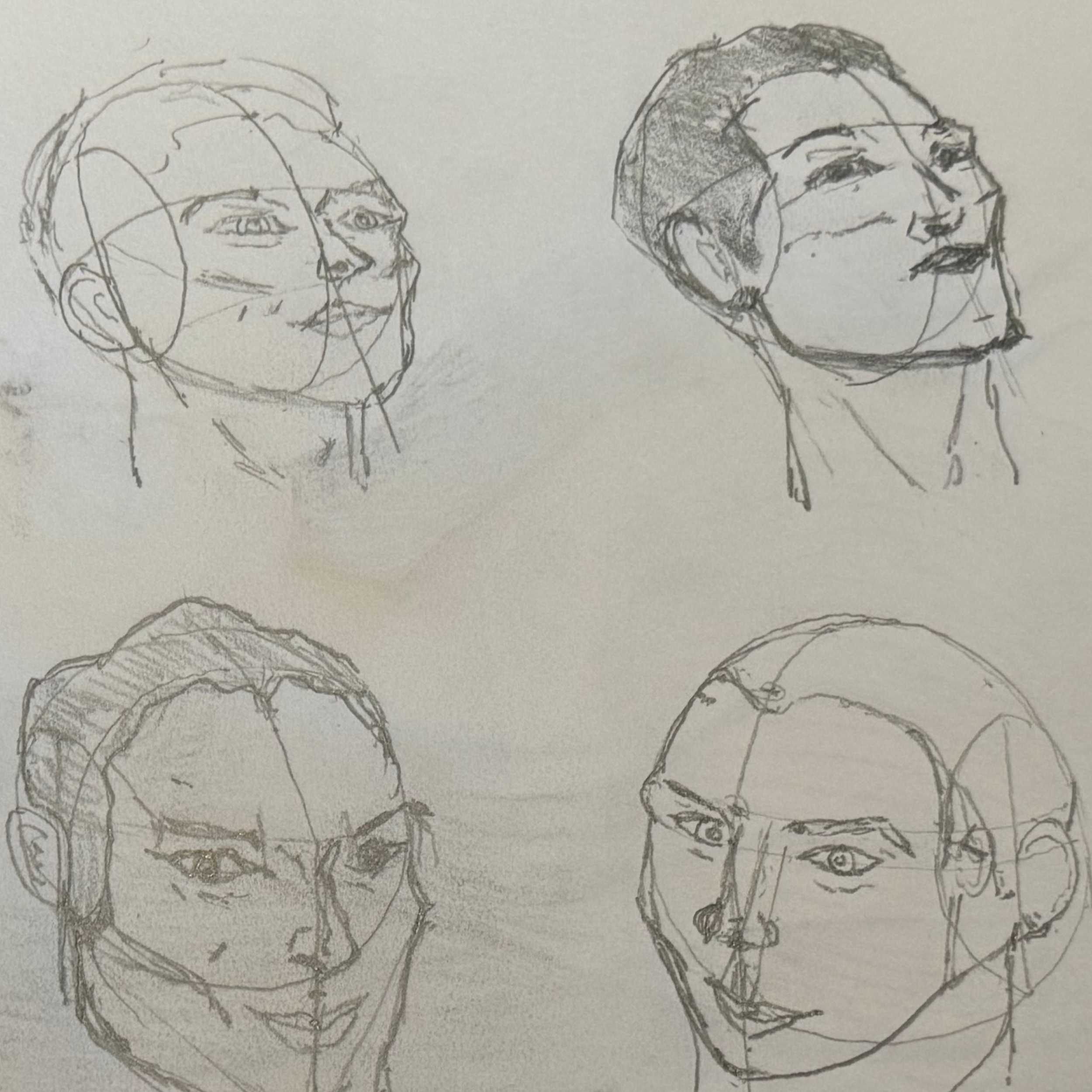
After working with the mockup of Razumov’s work, I realized that I needed to work on facial structures, proportioning, and neck alignment with my portraits. I began the day working with different facial angles in relation to the neck, and then progressed to several larger-format female faces.
Full Figure - w/ Initial Color
Even though I am used to working with custom color as far as mixing goes, this is the first time that I have experimented with using another person’s palette - and it is much more challenging than I ever expected. I am part way through the painting at this point, and will be curious to see how things shift once I push the darks and shadows.
Full Figure from Painting - III
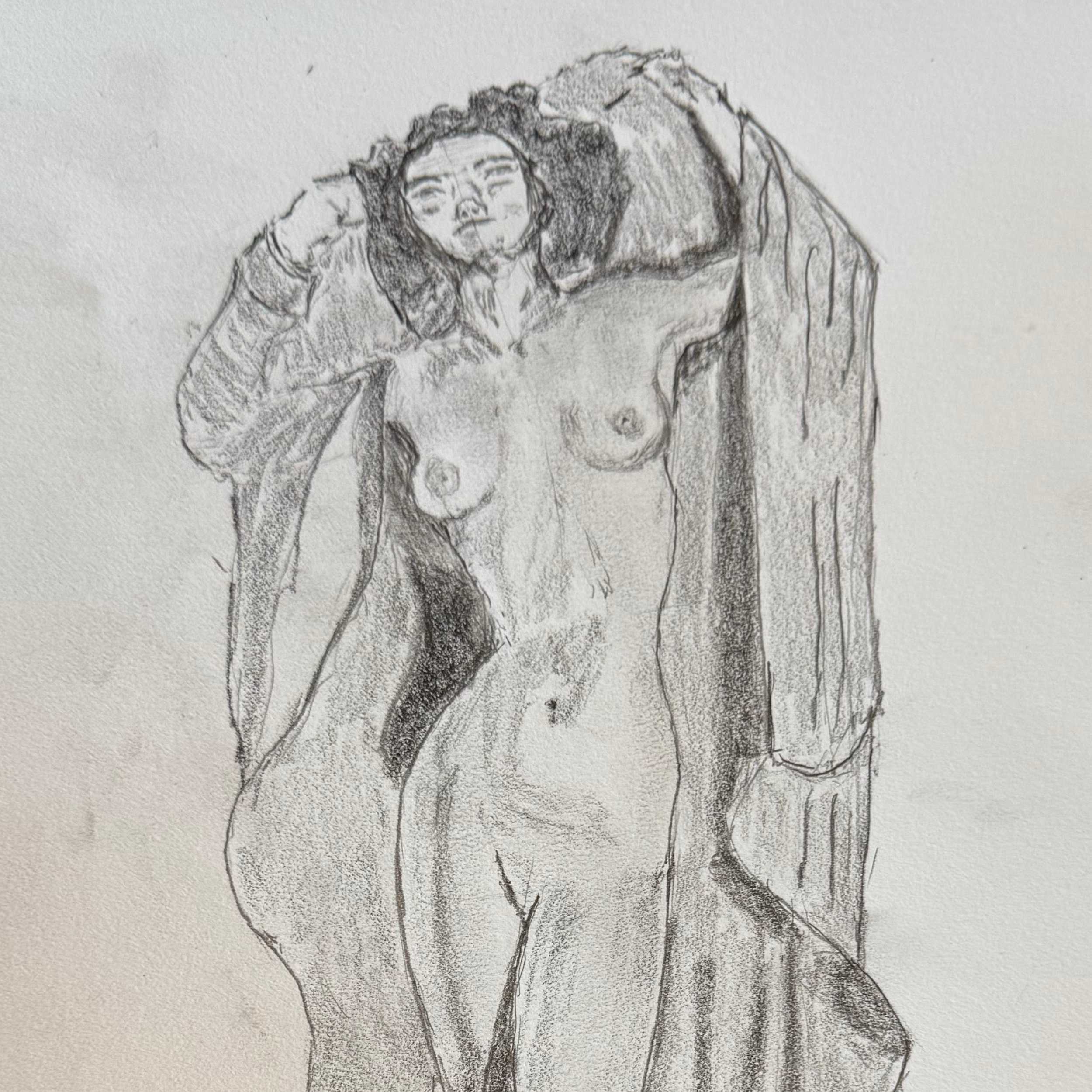
After working with the colored pencil, I decided to go back and do another rendition of Razumov’s work depicting a woman at a café. Thanks to all my pencil work, I noticed that I have an even lighter touch than before — allowing me to add in detail while letting the piece breathe.
Full Figure from Painting - II
After working with the sketch from the previous evening, I decided to work with a full-color version of Razumov’s painting in colored pencil to work on my figure proportions, flow, and perspective. After a bit of sketching, I decided to add ink in as well.
Full Figure from Painting - I
This is a light sketch that I made while talking on the phone to my artist friend, Lizzie. She made the suggestion that I look at and deconstruct artists that I find inspiring, so I pulled up a piece by Konstantin Razumov and began sketching.
Shading Figures - I
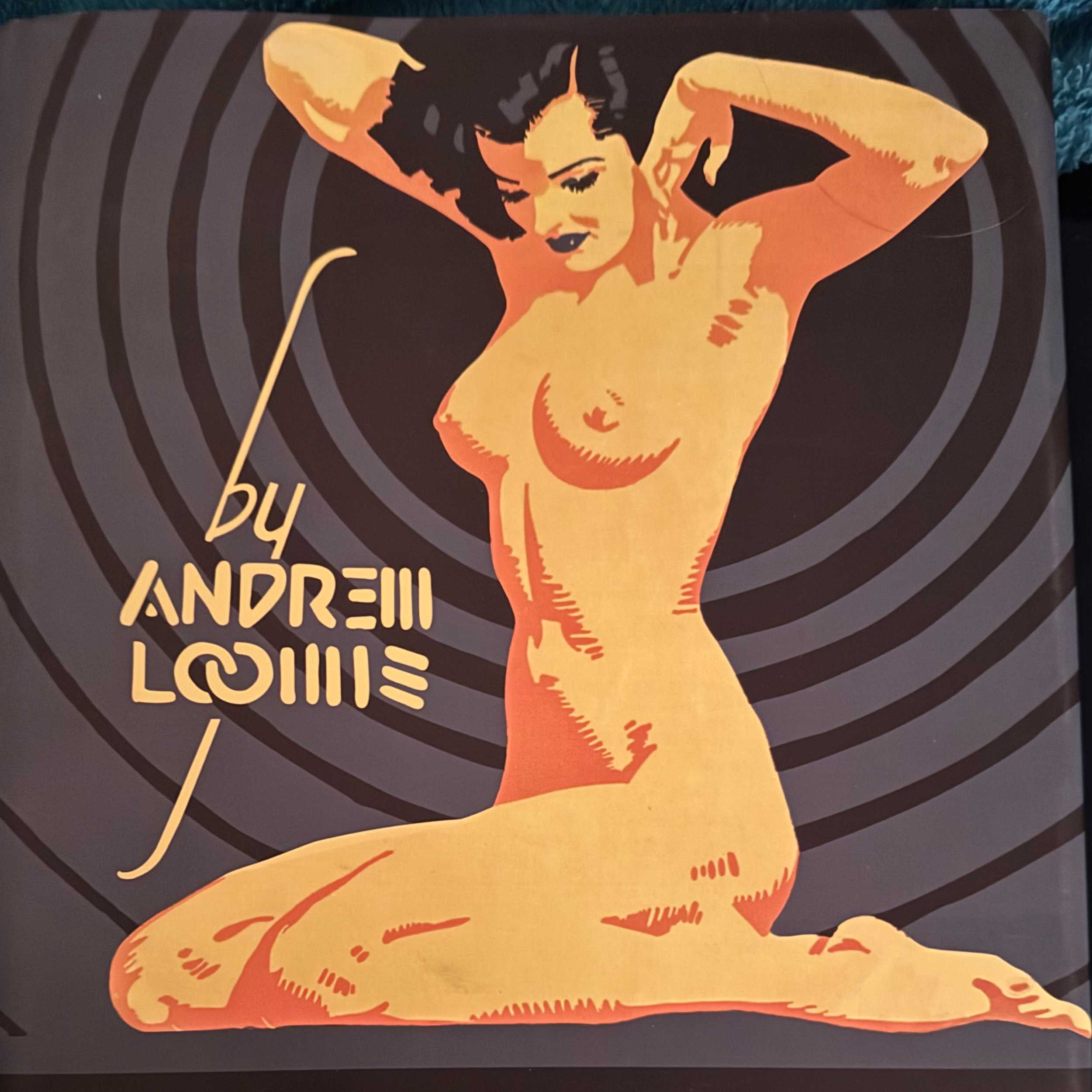
In these sketches, I was working with exercises from Andrew Loomis’ work, “Figure Drawing for All It’s Worth”, namely experimenting with the different planes that the human body can be broken into to help with light, shading, and contouring.
Working with Shading
In this exercise, based upon Loomis’ work, “Successful Drawing”, I decided to work primarily with shading and shadow, instead of relying upon line. The contours of the human face require a soft touch, otherwise people can end up looking much older than they actually are
Female Proportions - I
The female figure has different proportions than their male counterpart. Instead of breaking up the figure into eighths, I worked with a technique based upon dividing the figure into thirds and then sixths for proportioning and placing the hips.
The Female Figure
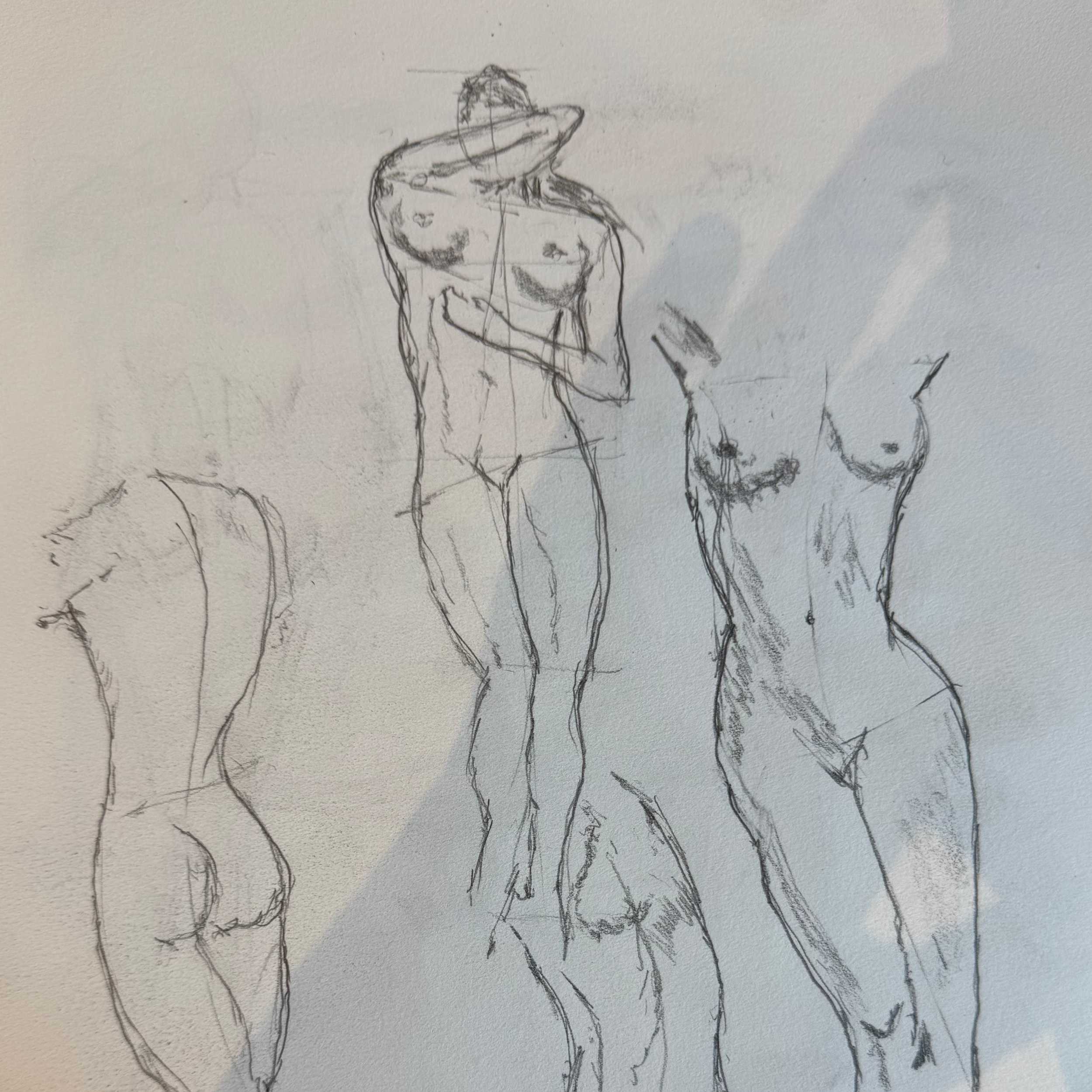
After working with the male proportions initially, I found it incredibly challenging to shift gears and properly lay out female proportions. The large number of sketches represent my level of frustration with not quite being able to simply “shift gears” and embrace a new set of proportions.
Three-Point Views
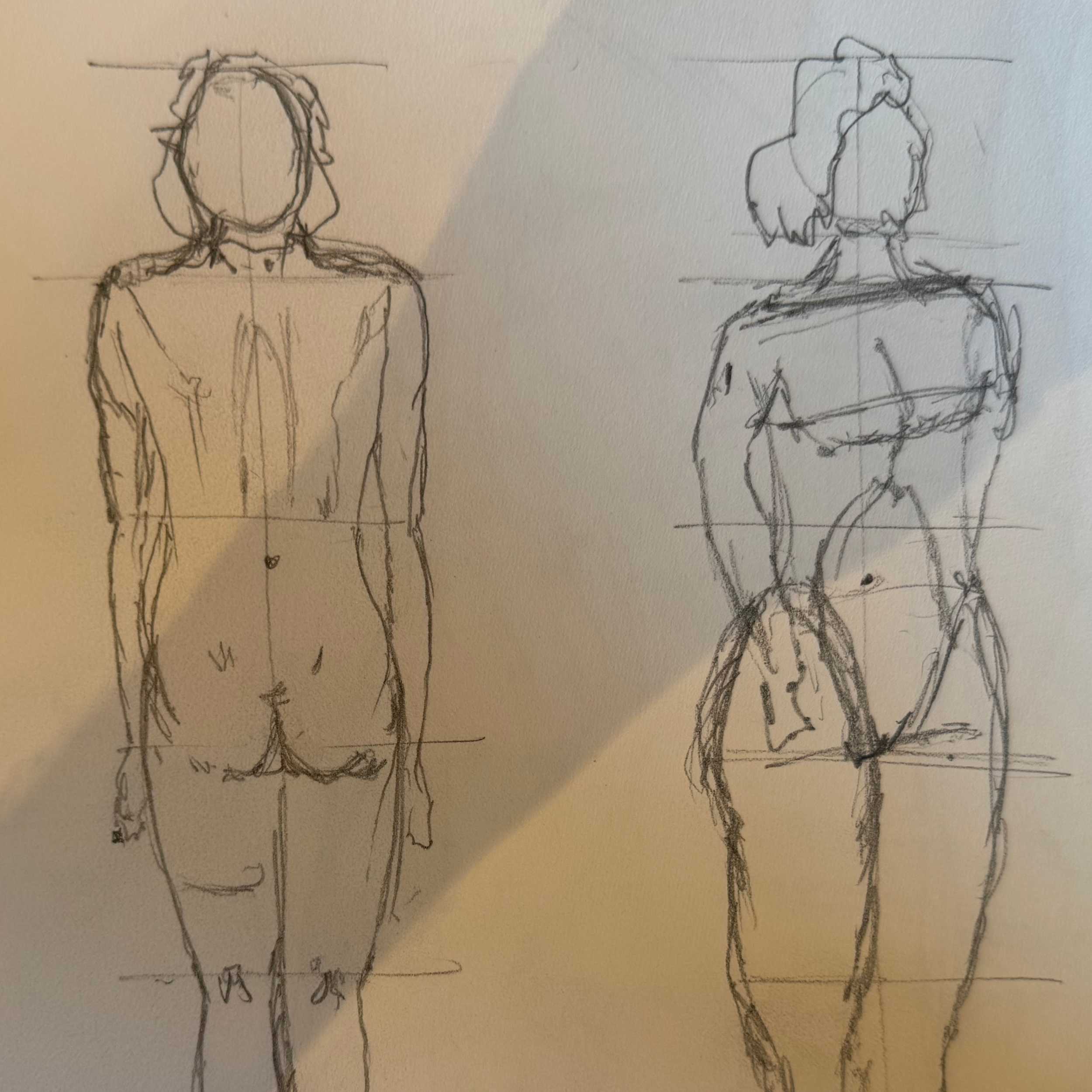
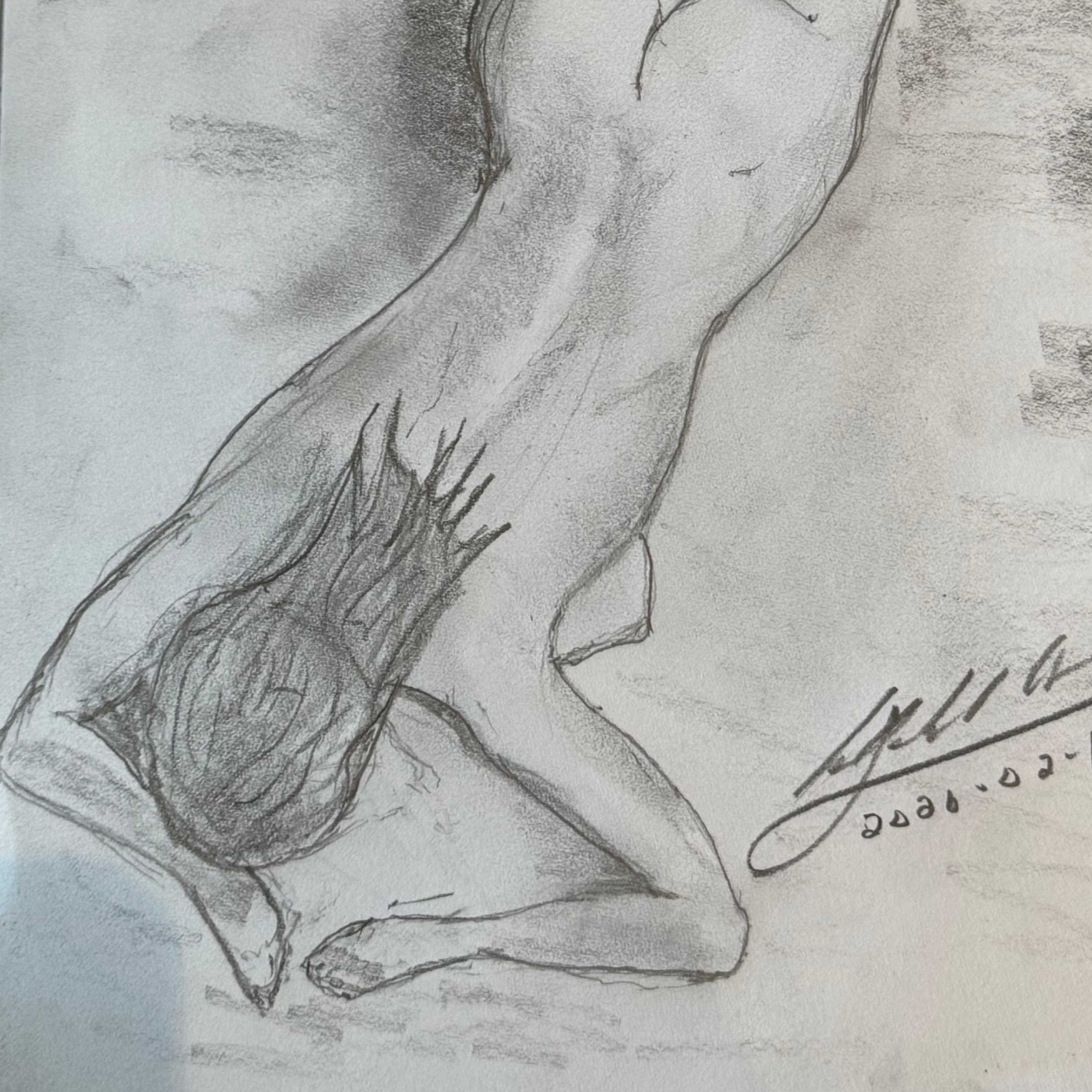
Today, I decided to step out into another realm and work with lines of flesh instead of solely upon proportions using the skeleton of a mannikin-based body. These are the three-view diagrams of men and women, working with and incorporating the lessons of proportion from my previous exercises.
Figures & Proportions
In this sketch, I was working with basic scaling and proportions for the (male) human figure. Like everything else, this is just a matter of practice.
Portraits & Planes - II
This was my first attempt at working with the secondary planes of the face. True to form, thinking in terms of the primary planes helped with my shading for the portrait in colored pencil, especially in the areas of the forehead and cheekbones.
A Portrait in Colored Pencil
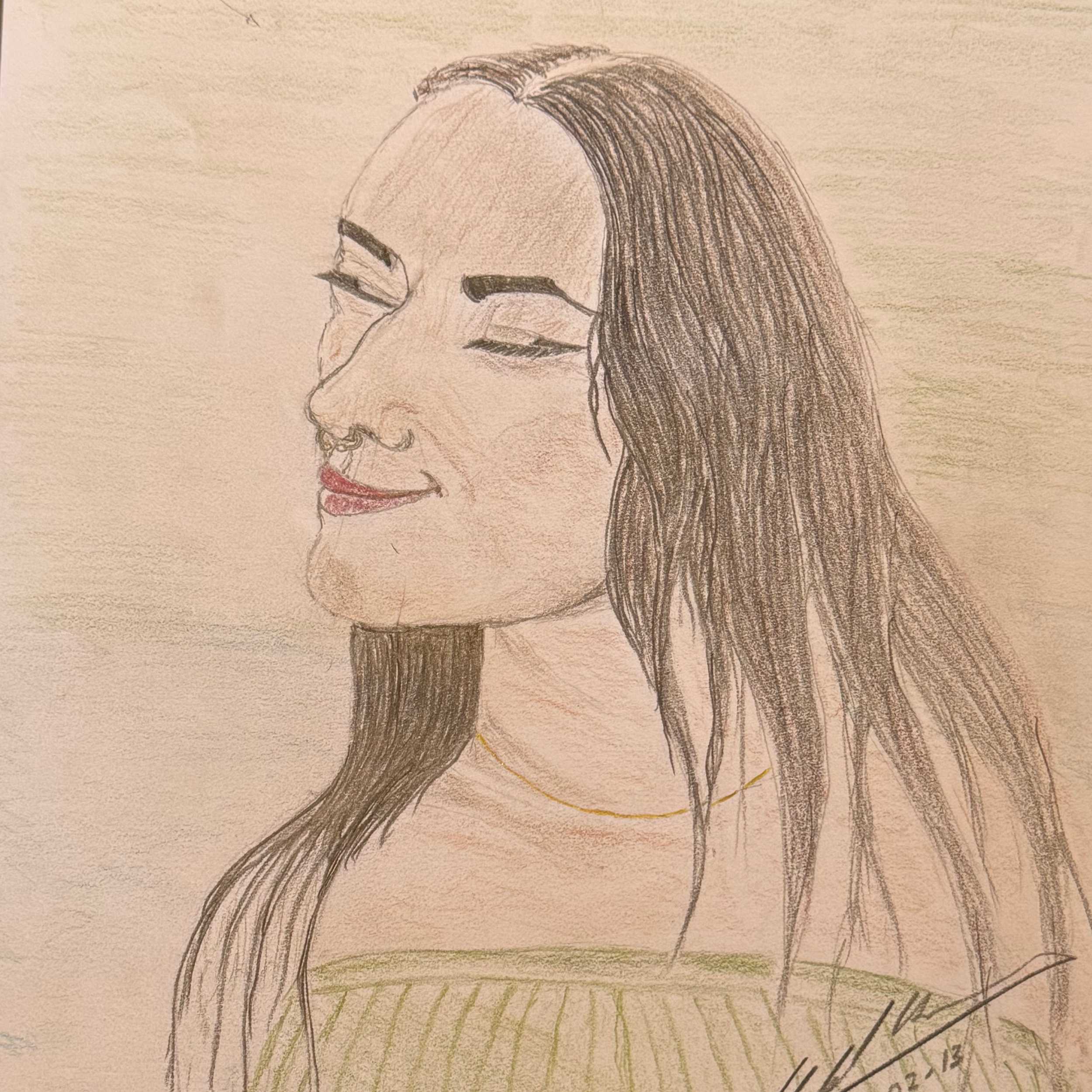
After working with the pencil for shading and proportions, I wanted to try something new, just to switch things up. The colored pencil forced me to really think about shading, while being more careful to lay down lighter construction lines to allow the lighter skin tones to speak.
A Portrait in Pencil
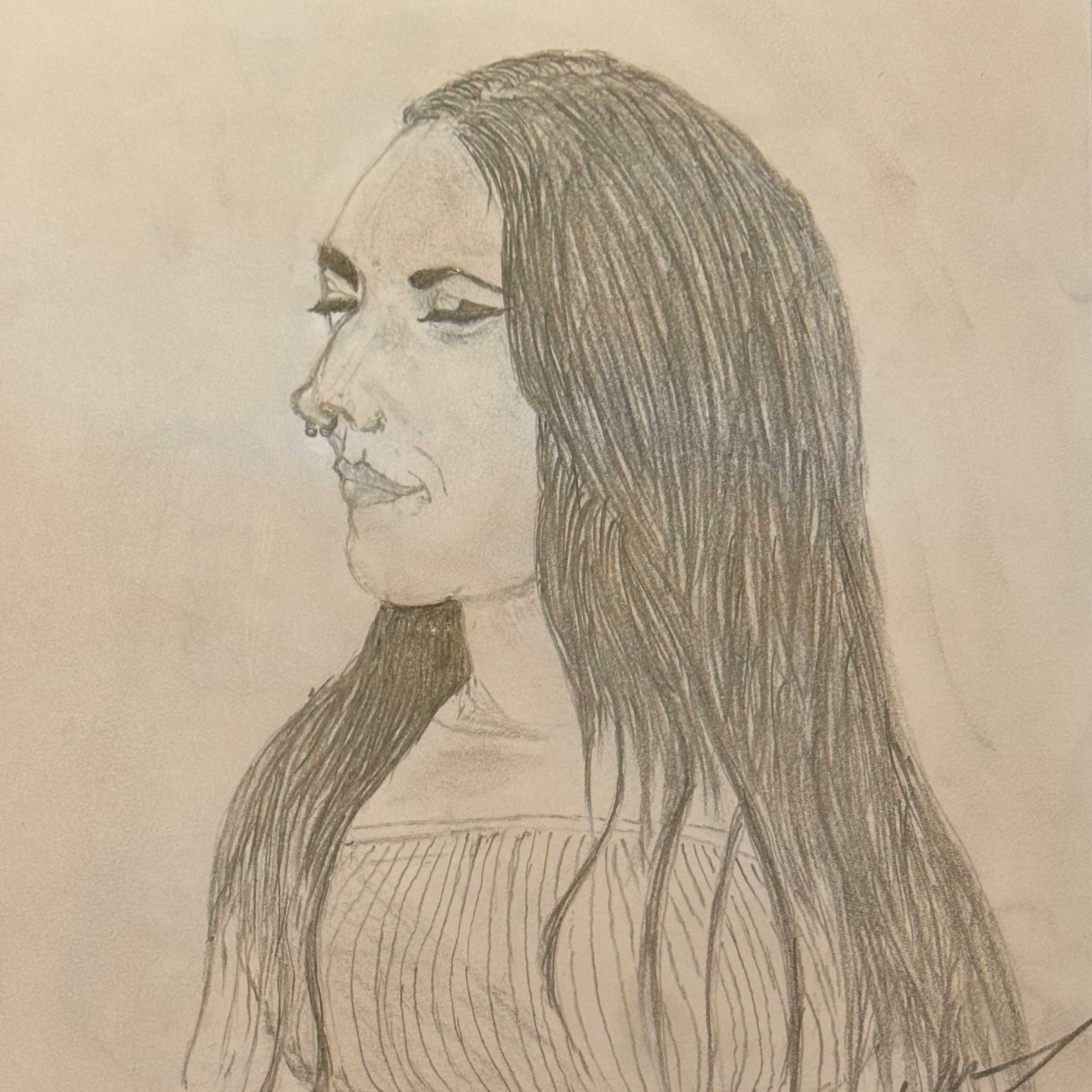
After working on structure and proportions, I decided to play with a real human, just to see how the techniques would work with an actual portrait. While I had completed several portrait commissions last year, I was surprised at how quickly these test portraits came together.
Portraits & Planes - I
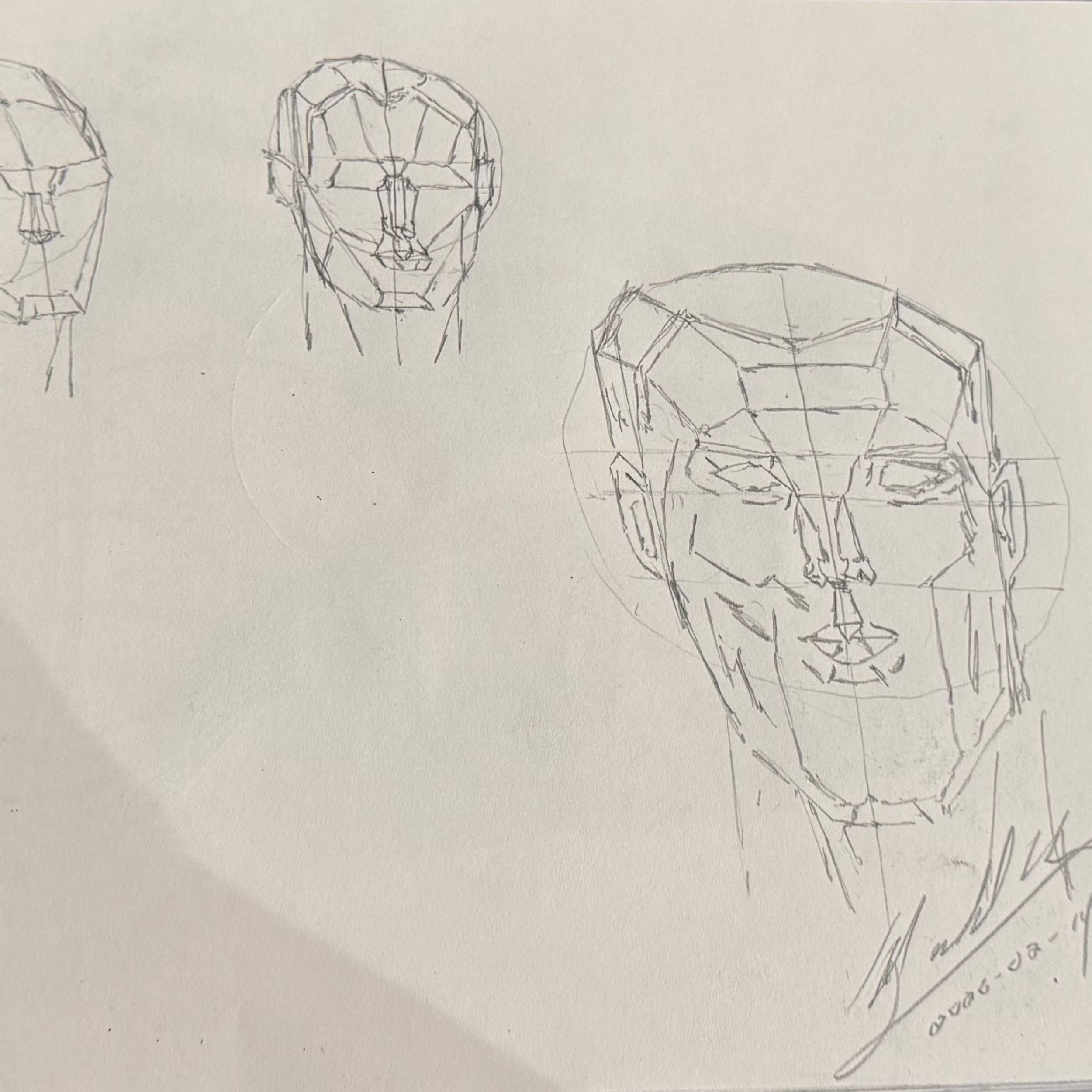
Today I decided to move from the structure of the skull and onto the basic placement of features, along with basic planes to begin getting a sense of shading.
Experimenting with Skulls
The skull is the foundation for the face, and is especially important for locating the line of the jaw and the cheekbones. Here, I moved on from basic (very basic) facial construction to a more defined architecture of the skull to get a better sense of the relations between the various features of the face.
Drawing the Head & Hands
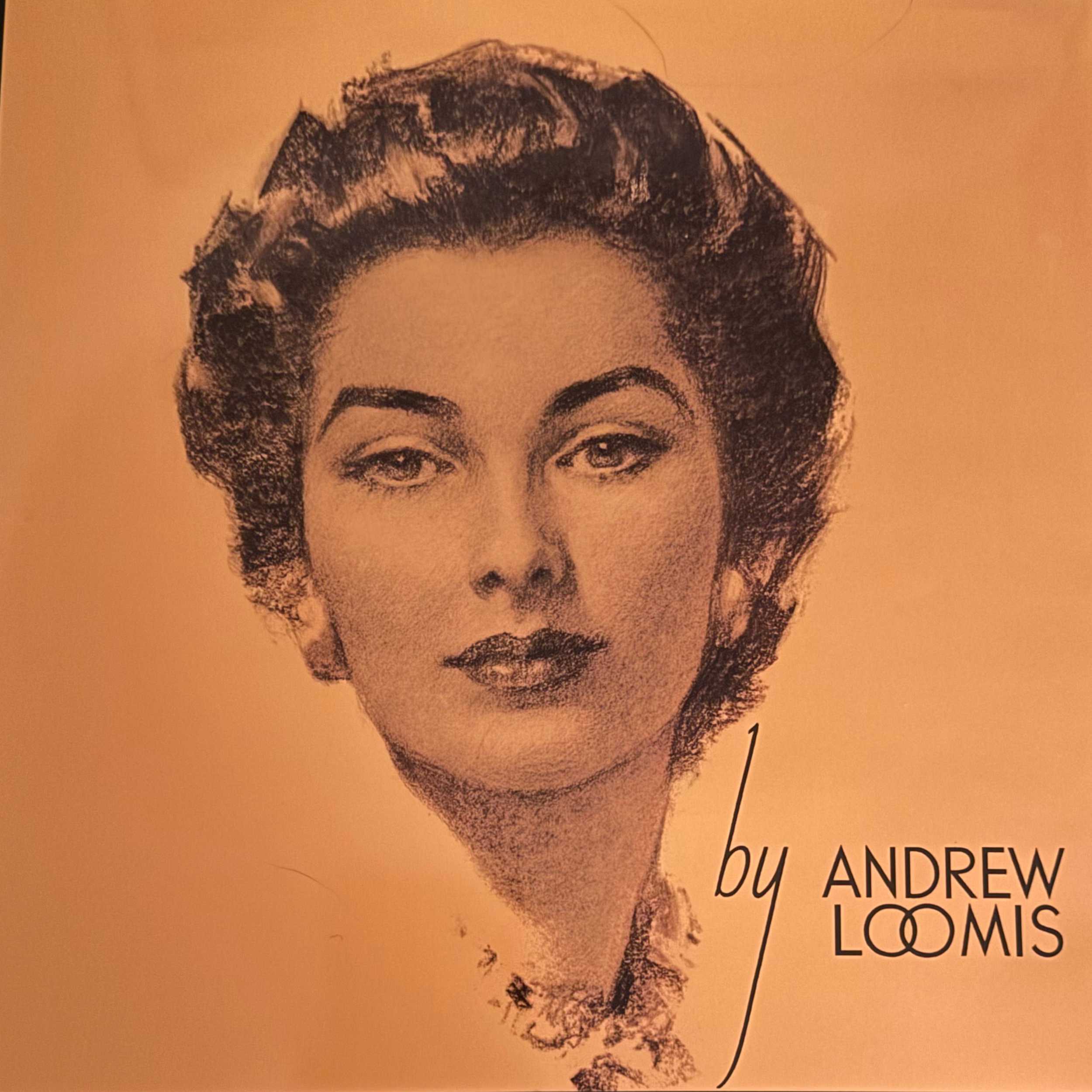
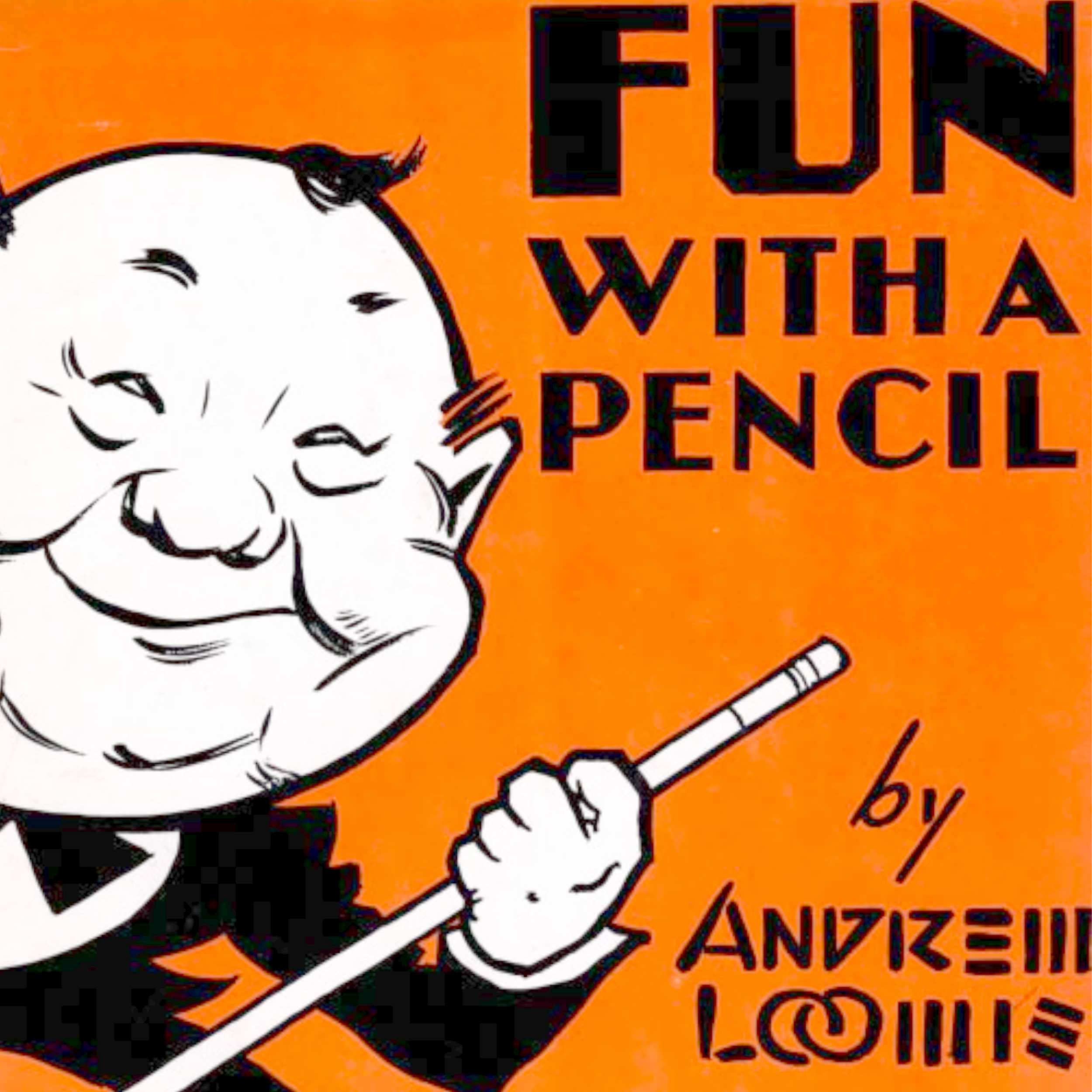
This book by Andrew Loomis, entitled “Drawing the Head & Hands” is one of the best references that I have found for laying out and drawing portraits. The method that Loomis recommends is straightforward and structured, while still allowing for (and even encouraging) individual creativity.
Playing with Portraits - I
Somewhat unexpectedly, I actually ended up doing several portraits for commissions last year. This year, I have decided to take more time to learn the fundamentals of figures and portraits, partially to do tarot card illustrations, but also to take my craft more seriously.
Fun with Figures - II
This was my second foray into figures and proportions. Here I began to work with basic bone structure instead of just lines - still working with the proportions of the male skeleton with different hips and cue angle on the knees.